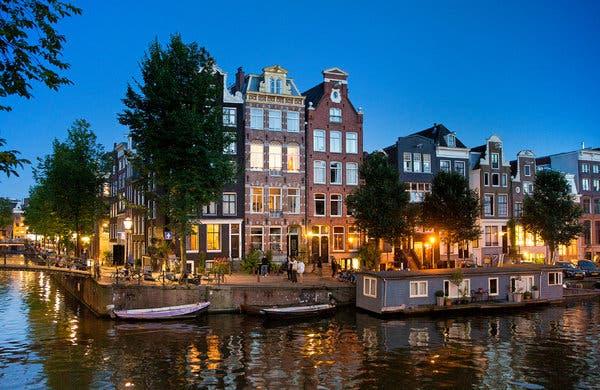
Houses line the central canals of Amsterdam’s city center.
Amsterdam, Revisited.
This year, our family made the exciting decision to revisit Amsterdam for our summer getaway. Amsterdam holds a special place in our hearts, as it has been an integral part of our lives in many ways. I personally spent seven years residing in this vibrant city, during which I even wrote a book about my experiences. Meanwhile, my partner Pamela called Amsterdam her home for an impressive 23 years. In fact, it was here that our paths crossed, leading to a beautiful journey together. Along with Amsterdam, we were also considering Enschede, a lesser-known but charming Dutch city. If you're also considering a visit, you might find this link useful. It's a comprehensive guide to the accommodations in Enschede, providing details and booking options for various hotels in the city https://www.hotels-in-netherlands.com/en/enschede-hotels-15149/. Furthermore, our son was born in Amsterdam, adding another cherished connection to this remarkable place. On another note, if you're interested in the best hotels across the Netherlands, including both Amsterdam and Enschede, this is another handy resource. Tophotels.com ranks the top hotels across various cities and could come in handy while planning your trip.
However, as time went by and we settled back in the United States, we began to feel a growing distance between us and Amsterdam. It became evident that while Amsterdam still held immense significance for us, it had inadvertently become somewhat detached from our everyday lives. Thus, our upcoming trip to Amsterdam would not only serve as a much-needed vacation but also a chance for us to reclaim the deep-rooted bond we have with this city. During our two-week stay, we aim to reignite old memories, reunite with loved ones, and rekindle our ever-present affection for Amsterdam.
Amsterdam, a city that we once called home, has undergone a remarkable transformation in just a short span of time. Various factors have contributed to this change, including a rapidly growing population, ambitious plans to construct 50,000 new homes within the next decade, and an influx of young adults aged 20 to 34, both from within the Netherlands and from countries such as Turkey and Morocco.
These new residents, with their energetic spirit and diverse backgrounds, are not only settling down but also actively shaping the cityscape. As they put down roots, they bring fresh ideas and perspectives, further enhancing Amsterdam's urban landscape.
Simultaneously, the cost of property in Amsterdam is skyrocketing. This can be attributed in part to the exorbitant housing prices in other prominent European cities such as London and Paris, forcing individuals to seek alternative options. Fortunately, the Netherlands stands as one of the few locations where securing a mortgage without any down payment is feasible.
In addition to this, Amsterdam experienced a surge in the number of permits issued for new hotels a few years ago, coinciding with the rise of Airbnb. Furthermore, the city's allure extends beyond tangible factors as it became a focal point for global hipsterism, which recognized Amsterdam's laid-back atmosphere, manageable size, and a culture centered around coffee and beer.
Arriving in Amsterdam is like stepping into a time capsule. From the moment you disembark the train at Central Station, the city greets you with its familiar sights and sounds. The bustling streets of Damrak and Rokin, where buses and tourists converge, remain just as lively as ever.
But amidst the chaos, the serene beauty of the canal zone remains unchanged. This area, with its picturesque gabled brick houses lining the central canals, is a testament to the city's rich history and the legacy of the Dutch Golden Age. It's no wonder that Amsterdam's canal belt is a UNESCO World Heritage site, revered for its architectural significance and timeless charm.
Did you know that Amsterdam has over 100 kilometers of canals? These waterways not only provide a stunning backdrop for the city's scenery, but they also serve as an integral part of its infrastructure. Many Amsterdammers use boats as their primary mode of transportation, creating a unique and vibrant canal culture.
So, whether you're strolling along the canals, exploring the bustling city center, or discovering hidden gems in its charming neighborhoods, Amsterdam offers an unforgettable experience that seamlessly blends the past and the present.

Exploring Amsterdam on a bicycle offers the ultimate way to navigate the city's charming streets and picturesque canals.
During my recent visit, we were fortunate enough to stay in a traditional canal house located in the medieval city center, where history permeated every corner. Our generous hosts, Kiki Amsberg and Joost Smiers, decided to merge their separate houses after three decades of living side by side. As a result, we had the privilege of occupying the smaller dwelling, a meticulously restored canal house dating back to the 17th century. With each room providing a stunning view of the ancient and contemplative Oudezijds Achterburgwal canal, tranquility enveloped us, despite being only a few blocks away from the vibrant Red Light District.
The hustle and bustle of Amsterdam quickly faded as we immersed ourselves in the city's preserved past. Every pedal through the winding streets and over historic bridges allowed us to uncover hidden gems and experience the rich heritage. Whether it was admiring the gabled facades or marveling at the ornate architecture, Amsterdam enticed us with tales of its past at every turn.
Every morning, my partner and I savored croissants and coffee from the nearby bakery in our cozy kitchen. As we enjoyed our breakfast, I couldn't help but imagine if Rembrandt himself once shared this very space with the previous occupant.
However, behind the charming facade of our neighborhood, the Binnenstad or Inner City, an unsettling change was taking place. According to Kiki, a local resident, an influx of wealthy foreigners, particularly Russians and Chinese, had been swiftly buying up the iconic, leaning houses. This surge in demand had driven up property prices and caused a decline in the sense of community as neighbors departed. Many of these once-beloved homes now stood empty, acting as mere pied-à-terres for their new international owners, devoid of the vibrant life they once held.
Exploring Amsterdam on rented bicycles is undoubtedly the most authentic way to navigate the city. However, as we pedaled away from the popular city center and ventured into the less frequented eastern and western areas, or across the IJ into Amsterdam North, we found ourselves in ordinary working-class neighborhoods and newly settled immigrant communities. These areas, often overlooked by tourists, reveal a different side of Amsterdam, with women wearing headscarves and social housing units."
Interestingly, the process of gentrification and the influence of tourism have not spared these districts either. Even the once less-visited neighborhoods are now witnessing the arrival of tourists eager to capture the essence of the city beyond the center. During a conversation at De Jaren, a modern café nestled in the heart of Amsterdam, my friend Ruth Oldenziel, a professor at Eindhoven University of Technology, shared her observations, stating, "I am now noticing tourists in my neighborhood, capturing photographs as if they were in the center of the city."
This transformation highlights Amsterdam's evolving landscape, where the influx of tourists and the waves of gentrification are extending far beyond the central and gentrified areas. As these districts open their doors to a wider audience, Amsterdam continues to reveal its diverse cultural fabric and the blending of communities that shape its unique identity.
The architecture of the houses lining the main street in Weesperzijde neighborhood may not be as historically significant as those from the 17th century, but their proximity to the picturesque Amstel River makes them an attractive destination for residents and tourists alike.
To my disbelief, Reinier Koch, a resident of Amsterdam, insisted that the Indische Buurt, also known as the Indies Neighborhood, had undergone a similar transformation. This area, which was once home to Turkish and Moroccan immigrants, as well as halal butchers and small corner stores filled with the aroma of cumin, has evolved into something new.
Amsterdam's ever-changing neighborhoods offer a rich tapestry of diversity and cultural exchange. Exploring the city allows visitors to witness firsthand the vibrant and dynamic nature of its local communities.
In this evolving city, the winds of change are being driven not by tourists, but by the locals themselves. The escalating costs in other parts of Amsterdam have paved the way for young families, artists, and adventurers to explore uncharted territories. As we strolled along Javastraat, the bustling main street, signs of gentrification became apparent: a specialized store offering the finest olive oils, a trendy frozen yogurt shop, a women's boutique with exquisite handbags displayed on distressed wooden tables, and, perhaps most telling, a coffee bar named Bedford-Stuyvesant.
Amidst this transformation, it's intriguing to witness Amsterdam's vibrant energy as it attracts a new wave of inhabitants seeking to leave their mark. As the city continues to evolve, it provokes a sense of curiosity and excitement, urging visitors and locals alike to explore and uncover the hidden gems that lie beyond its renowned attractions. Whether it's discovering a picturesque canal, stumbling upon a unique gallery, or savoring the flavors of a local eatery, Amsterdam offers endless opportunities for those willing to embrace its dynamic spirit.
Within the inviting confines of the charmingly dubbed Bar Basquiat, we indulged in delectable pork belly buns and Turkish sausage pizza. Around us, androgynous pairs and stylishly attired Asian youths strolled the walkways, showcasing the vibrant diversity of the locale. An occasional sight of an aged lady shrouded in a headscarf would remind us of the unyielding essence of tradition amidst an ever-evolving landscape. As a familiar figure greeted me, patting my shoulder, the full expanse of this change brushed past. I recognized him as an old friend, employed by the city's administrative force. "Enjoy my locale!", he exclaimed enthusiastically. He went on to acknowledge the swift transformation we were witnessing and articulated his thoughts of the community achieving a harmonious blend of innovative and time-honored elements. However, echoing the sentiments expressed by other locals I conversed with, he wished for a gradual pace in the influx of newcomers and visitors to the city.
Comparable transformations have been witnessed at the city's western frontier. The Spaarndammerbuurt district, which served as a canvas for Amsterdam School architects in the initial years of the 20th century, showcases an evolution of their designs. These striking, often playful statements were fashioned from humble brick residences into architectural artwork. Historically, it was recognized as a laborer's enclave. Currently, it pulses with vitality provided by wine merchants and vegetarian takeaway outlets. An excellent culinary experience was found at Pikoteo, an innovative Tapas restaurant offering a laid-back atmosphere, freshly launched by a pair of entrepreneurs - one hailing from Madrid and his partner from Amsterdam itself.
Amsterdam North, located across the harbor from the main city, has historically faced a disconnect from the rest of Amsterdam. Efforts by municipal planners to integrate this section, known as "Noord," have yielded positive outcomes. The prominent challenge in this process has been Central Station, which has now been revamped on the northern side to include a bustling plaza of shops resembling an airport.
However, the most notable transformation is the introduction of a tunnel adorned with traditional blue-and-white Dutch tiles showcasing ancient maritime scenes. This tunnel offers a seamless route for pedestrians and cyclists, bypassing the chaotic train station and leading them directly to the picturesque waterfront and complimentary ferry services.
Amsterdam's commitment to bridging the divide with Amsterdam North is evident in the innovative enhancements made to Central Station. The city's energetic progression has fostered a unification between the two sections, providing visitors and locals alike with easier access to Amsterdam's scenic waterfront and its vibrant cultural offerings.
Prior to 2012, Noord was not a common destination among travelers, until the EYE Film Institute found its home on the waterfront, directly across from Central Station, reminiscent of a spaceship from the classic "Star Trek." It rapidly emerged as a cultural hotspot in that district. Recently, in June, a towering 22-story structure, formerly the Royal Dutch Shell headquarters, became accessible to people. The interior features a hotel, artist lofts, and studios for performances, although these weren't our priority. Instead, we invested 12.50 euros (around $14) per head to shoot up to a viewpoint known as the A’Dam Lookout. Reaching 300 feet, this was the priciest elevator trip I'd ever taken, but the expansive and breathtaking panoramas extending miles in all directions justified it.
The cityscape of Amsterdam is continually being adorned with budding eateries along its waterfront, reinforcing the linkage between the city's two halves. Situated on the IJdok peninsula in a distinct contemporary structure is the newly opened MOS, a restaurant that presents a blend of nostalgic "French-international" nouvelle cuisine, augmented by stunning vistas of the water. While I enjoyed a satisfying dining experience at MOS, it, along with a few other recently opened eateries, ignited a concern: as Amsterdam evolves and expands at such a rapid pace, it also risks losing its distinctness.
Although there's no denying that the gastronomic scene has advanced (considering the nature of traditional Dutch cuisine), I'm compelled to mention here that I had a few instances where I felt like I was partaking in a similar dining experience that could have been found in a city like Chicago. What sets a city apart is its unique signature, and it is that uniqueness that Amsterdam needs to preserve amidst its escalating evolution.
Ruth Oldenziel expressed a similar viewpoint, highlighting how the city government has recently taken measures to restrict houseboats on the canals. These unique and often improvised residences have been a characteristic feature since the aftermath of World War II. She expressed concern about the potential removal of all irregularities, which could diminish the city's charm.
An interesting aspect to consider is the extent of these changes. When reminiscing about Noord, I recall it being a place of serene tranquility once you moved away from the waterfront. However, a local newspaper recently published an article criticizing the gentrification of Noord, suggesting that the increasing abundance of luxury cars such as BMWs has overshadowed the pastoral atmosphere and made it difficult to see the cows that once grazed there.
As the sun bathed the Dutch countryside in a warm glow, my family embarked on a cycling adventure to uncover Amsterdam's hidden treasures. Leaving the bustling city behind, we pedaled through picturesque polders, where vibrant farmland stretched as far as the eye could see. In this serene oasis, the melodious symphony of nature replaced the familiar clamor of modern life.
Veering onto a tranquil polder path, we paused to absorb the tranquil surroundings. The gentle rustle of the wind through the reeds whispered secrets of generations past. Along the winding waterways, graceful herons and majestic geese soared through the skies, creating a living canvas reminiscent of Jacob van Ruisdael's masterpieces.
Exploring Amsterdam's outskirts revealed a slice of Holland often overshadowed by its urban charm. A mere 10 minutes from the ferry, we were transported to a world where agriculture thrived in harmony with nature.
Witnessing this idyllic landscape, untouched by the frenetic pace of city life, I couldn't help but feel a deep connection to the rich history and artistic heritage that define the Netherlands. As we continued our journey, I marveled at how Amsterdam's allure extended far beyond its vibrant streets, captivating travelers with its hidden gems nestled within the countryside.
Amsterdam's city center has undergone significant changes, with the most notable being the surge in tourist numbers. According to statistics, there was an 11 percent increase in hotel stays during the first four months of 2016, totaling a staggering 4.3 million stays. This growth surpasses the previous record set in 2015.
The bustling center of Amsterdam, from the picturesque canals to the vibrant squares like Leidseplein and Rembrandtplein, now teems with visitors from all corners of the globe. However, the influx of tourists has prompted some concerns among locals who have noticed the rise in crowds.
As tourists continue to flock to this dynamic city, it's important to strike a balance between welcoming visitors and preserving the unique atmosphere that makes Amsterdam so appealing. To accommodate the rising numbers, the city has been exploring innovative solutions to mitigate the impact on the city center, ensuring both residents and tourists can continue to enjoy all that Amsterdam has to offer.
Yet, on a more positive note, several impactful changes have occurred. In past years, most of the significant museums faced simultaneous renovations, leading to closures or partial operations. However, every refurbishment endeavored has reached completion, transforming these cultural hubs into shining beacons.
Foremost among these is the formidable Rijksmuseum. As the national treasury of Dutch art and history, its 2013 reopening was greeted with ecstatic reviews. Its beauty is beyond stunning. The redesign masterfully manages to preserve the authenticity of its original 19th-century blueprint while modernizing it. To current sensibilities, what could be perceived as a cumbersome fortress now emanates an ambiance of elegance and warmth. Its popularity, parallel to the city, has surged exponentially. Prior to its partial closure in 2003, there were 800,000 visitors; this year, a staggering guest count of two million is projected. The Rijksmuseum continues to be an instrumental part in Amsterdam's cultural vibrancy, with its vast collection of masterpieces acting like a time-capsule, offering visitors a glimpse into the rich tapestry of Dutch history.
Taco Dibbits, the Rijksmuseum's newly appointed director, took the time to sit down with me and share his insights on the museum and Amsterdam as a whole. In our conversation, Mr. Dibbits shed light on the growing popularity of both entities, drawing attention to a significant turning point around the year 2000.
During this time, Bill Gates sparked controversy by stating that art collection was unnecessary in the digital age, as one could easily access any painting on a screen. However, Mr. Dibbits astutely pointed out that rather than replacing physical experiences, the virtual world has driven a desire for genuine encounters. People crave the tangible, wanting to immerse themselves in the real world, even when surrounded by the allure of the digital realm.
It is fascinating to observe this shift in perspective, as individuals seek out authentic encounters amidst an increasingly virtual landscape. The Rijksmuseum, with its rich collection of masterpieces, serves as a testament to this longing, offering a space where visitors can connect with history, art, and culture.
When Taco Dibbits assumed the directorship of Amsterdam's Rijksmuseum in July, little did he know that a remarkable pair of former residents would also make their return to the city. Earlier this year, the Rijksmuseum and the renowned Louvre collaborated to acquire Rembrandt's exquisite wedding portraits of Marten Soolmans and Oopjen Coppit, two affluent individuals from 17th-century Amsterdam, for a staggering 160 million euros. In an exciting arrangement, these captivating works of art will be alternately showcased at both museums, granting visitors the opportunity to marvel at their beauty and historical significance.
For a limited time, the happy couple can be admired at the Rijksmuseum until October 2nd, immersing viewers in the opulence and grandeur of the past. This unparalleled partnership between two esteemed institutions not only ensures the preservation and accessibility of these extraordinary portraitures, but also highlights the mutual admiration and dedication of the art community in celebrating the history and culture of Amsterdam.
The recently unveiled paintings, showcased alongside Rembrandt's renowned masterpiece "The Night Watch," have enjoyed an exclusive existence in private collections since their creation, making their public debut a truly extraordinary occasion. This unveiling grants an unprecedented opportunity for art enthusiasts to finally bear witness to these remarkable life-size portraits, which constitute Rembrandt's first foray into this medium.
These stunning works of art, formerly hidden away, offer a captivating glimpse into Rembrandt's artistic evolution and mastery. With each brushstroke, the artist's skill and insight are vividly brought to life, providing a unique perspective on his early endeavors as a portraitist.
During this period, Amsterdam reserved special treatment exclusively for the aristocracy, but the arrival of a young Rembrandt, full of ambition, would challenge these traditional conventions. At the tender age of 28, the artist saw an opportunity to make a profound statement not just about the affluent, yet unheralded pair he depicted, but also about himself and the thriving city he now called home.
Amsterdam stood at the cusp of becoming the most influential metropolis on the planet, with its economic prowess driven by remarkable individuals like the Soolmans and Coppit families. These ordinary citizens had defied the odds, ascending to the pinnacle of society through their relentless hard work and creating formidable enterprises that spanned the entire world. The remarkable pair of paintings, both exotic and deeply stirring, encapsulate the essence of what defines Amsterdam—a city brimming with ambition, entrepreneurial spirit, and boundless opportunities.
Each time I make a return trip to Amsterdam, I ensure that I pay a visit to Frieda Menco, who holds the record as my oldest friend at the remarkable age of 91. During her childhood, Frieda resided just around the corner from Anne Frank, forming a close bond with both Anne and her sister Margot. Sadly, like the Franks, Frieda's family was seized during the harrowing period of World War II and transported to a concentration camp. Against all odds, Frieda and her mother crossed paths with Anne and her mother while being held in Auschwitz. While the Franks tragically lost their lives, Frieda and her mother miraculously managed to survive. It was during the course of interviewing Frieda for my book centered around the rich history of Amsterdam that our friendship blossomed.
For a deeper understanding of the profound stories that unfolded within Amsterdam's borders during this tumultuous time, be sure to explore the captivating tale of Anne Frank and Frieda Menco. Enriching both the heart and mind, this impactful history will undoubtedly leave a lasting impression on anyone who ventures down this path.
During our visit to her apartment, Pamela, Eva, Anthony, and I had the pleasure of sharing a meal with Frieda. It had been quite some time since Frieda had last seen Anthony, who was now six years old. As we sat together, Frieda and I began to recount some of her remarkable experiences, and I could see a range of emotions playing out on Anthony's face. He was captivated yet visibly disturbed by the notion that war was not merely confined to games or television. Curiosity fueled his inquiries, and Frieda graciously provided answers, divulging even the details of the concentration camp number tattooed on her arm.
As we dined, Anthony's thirst for knowledge seemed insatiable, keenly interested in every aspect of Frieda's story. Our conversation didn't shy away from the harrowing realities, and Anthony absorbed it all, eager to understand and make sense of the world. It was a poignant reminder that history is not confined to textbooks, but lives on through the firsthand accounts and resilience of individuals like Frieda.
During our visit to Amsterdam, my friend Frieda recommended that we take Anthony to the Anne Frank House. However, we were unable to secure advance tickets, and I was unwilling to waste precious time waiting in line. Instead, I decided to take Anthony to the Dutch Resistance Museum, a lesser-known gem that I personally adore.
The museum has recently undergone a renovation, offering a captivating children's section that transports visitors back in time to experience life under Nazi occupation. As you navigate through the recreated 1940s parlors and bedrooms, you find yourself immersed in the stories of different children, with a German soldier at the door and a defiant voice echoing from the radio. The interactive exhibits are so engaging that Anthony insisted on going through it all over again.
If you're curious to learn more about this fascinating museum, you can visit their official website for more information and updates on their exhibits and events.
Visiting the Dutch Resistance Museum not only provided us with a captivating journey into Amsterdam's history, but it also offered a thought-provoking perspective on the resilience and bravery of those who resisted the Nazi regime. This experience was undoubtedly a highlight of our trip.
Our journey began to reflect a pervasive theme: my son's deep interest in the war era, specifically the Nazis' reign and the fate of the Jewish population. A suggestion from a friend led us to the newly inaugurated National Holocaust Museum. Located in a former school that served as a haven for Jewish children during these frightful times, the museum, although still in the formative stages, left a profound impact on both of us. The introductory showcase, which comprised evocative paintings by renowned Dutch actor and artist Jeroen Krabbé, left us profoundly moved. Illustrating the grim tale of his grandfather's odyssey that tragically ended at the Sobibor concentration camp. on large canvases, Mr. Krabbé's work offers a heart-wrenching historical narrative. It's worth mentioning, as an interesting fact, that the school housing the museum is steeped in history, having been a protective place for Jewish youths during World War II. Also, notably, Jeroen Krabbé's artistry is not just confined to canvas, but extends to his remarkable acting career as well.
Immersed in the profound experience of studying the haunting paintings, we were compelled to delve further into the artist's perspective through a thought-provoking documentary. Returning to the paintings with newfound understanding, we found ourselves captivated once again.
At the heart of the exhibition, amidst the powerful artwork, stands a meticulously crafted scale model of the Sobibor camp. This remarkable installation allowed Anthony, driven by a childlike curiosity, to explore the inner workings of this death factory and ponder the chilling realities. Struck by the raw emotions, he questioned the harrowing conditions faced by the victims. His innocent inquiry ventured into the realm of the survivors' resilience and the unimaginable atrocities they endured.
While Amsterdam has yet to experience any direct effects from Britain's decision to leave the European Union, conversations with friends have consistently raised concerns about its potential impact on the city. People hold a range of opinions, but the prevailing sentiment is that such a development would disrupt the equilibrium Amsterdam has long enjoyed as a financial hub. Speculation has even emerged suggesting that Amsterdam could replace London as the de facto economic capital of the European Union, a prospect met with apprehension by those I spoke to. With a population of only 830,000, Amsterdam is significantly smaller than London, and its residents are wary of how to maintain a delicate balance between growth and change while preserving the city's cherished traditions and high quality of life.
Interesting to note, Amsterdam's charm has always stemmed from its modest size; however, this has not hindered it from becoming a prominent financial center with a rich history. In considering the potential ramifications of Brexit, one cannot help but admire the city's ability to punch above its weight in global affairs.
Amsterdam’s unique identity is rooted in its lack of a central, representative monument like Big Ben or Notre Dame. Instead, the city finds its defining symbol in the canal houses, one of which we had the pleasure of staying in thanks to our friends Kiki and Joost. These individual family dwellings perfectly encapsulate Amsterdam's character, as the city developed around the power and needs of individuals rather than monarchs or churches.
Unlike other European capitals, Amsterdam's central forces were commerce, art, and science, all spearheaded by individuals. This emphasis on individualism has shaped the city into a vibrant hub of creativity and entrepreneurship. The canals, lined with picturesque canal houses, serve as a testament to Amsterdam's rich history and unique spirit.
In the era known as the Golden Age, Amsterdam's traders played a crucial role in bringing rare and exotic goods from all corners of the world to their doorstep. These merchants navigated the canals, which acted as extensions of the city's reach, ensuring that treasures such as cinnamon, nutmeg, and pepper found their way into the attics of their homes.
The influence of this vibrant trade is evident in the Dutch interior paintings of the 17th century, which exalt the unique sense of domesticity cultivated by these enterprising traders. These captivating artworks epitomize the essence of "gezelligheid," a concept that defies easy translation but encapsulates the warmth and security of being surrounded by loved ones.